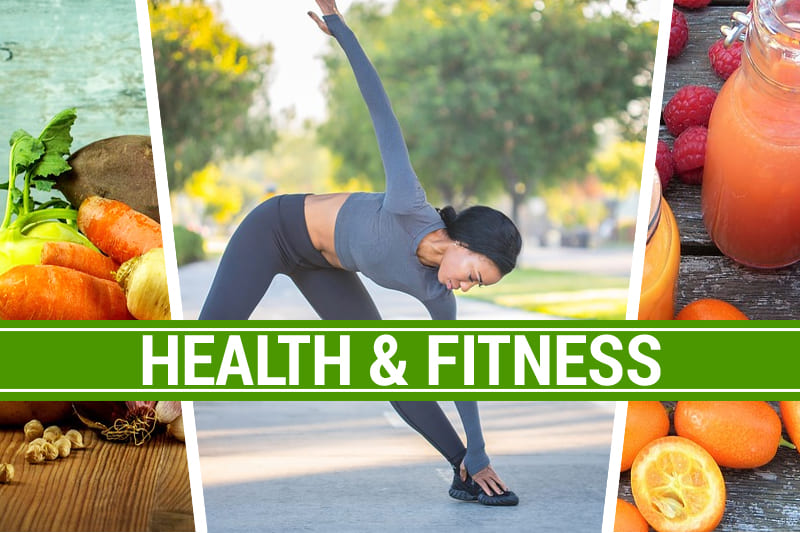
Walking, lifting weights, doing chores – it’s all good. Regardless of what you do, regular exercise and physical activity is the path to health and well-being. Exercise burns fat, builds muscle, lowers cholesterol, eases stress and anxiety, lets us sleep restfully. In this guide, we match resources to your exercise needs — at every fitness level.
The Basics Exercise and Weight Loss How Exercise Boosts Your Metabolism Making Time for Fitness Your Guide to Getting Started
Exercise Benefits Exercises for a Healthy Heart Regular Exercise for Mental Health Workout Plan That Improves Posture Myths About Exercise and Aging
Beating the Obstacles No Gym? Exercise at Home Risky Exercises and Better Bets Best Workouts for Cold Weather Best Workouts for Hot Weather
Getting Better Take Your Workout to the Next Level Set Smarter Health Goals Stay Healthy With These Apps Should You Get a Fitness Tracker? Tips for Using a Fitness Device
Avoiding Sports Injuries Prevention and Treatment Muscle Strain Overview Lactic Acidosis and Exercise Common Injuries From Running Knee Ligament Injuries Achilles Tendon Injury Ankle Injuries Rotator Cuff Tear Head Injuries Sports Injuries A-Z
Cardio 101 Walking for Exercise Getting Started With Running Indoor Cycling Swimming: Low-Impact Cardio
Tools & Resources Body Mass Index (BMI) Calculator Resting Metabolism Calculator Target Heart Rate Calculator Fitness Gadgets and Workouts A-Z
The Basics Weight Training Overview What Are Plyometrics? Better Core Exercises
Upper Body Work Out Your Lats Get Bigger Biceps Strengthen Your Triceps Exercises for Your Chest
Lower Body Booty Boot Camp How to Do a Proper Squat Calf-Strengthening Exercises Workout Types Kettlebell Exercises
What Is P90X? Learn About CrossFit Benefits of Yoga Why Pilates Moves Work
Good Sources of Protein Staying Hydrated During Exercise Health and Fitness Resources
TOP PICKS Taking Control of Your Cancer Risk: Strategies You Should Know.
We are all completely aware of the kind of health risks that we are exposed to on a daily basis, and that has made hygiene the most vital part of our life. Actually, majority of the new-world diseases like bird flu and swine flu have been associated with lack of hygiene. If we work towards maintaining better hygiene today, it will surely help the generation that would follow us.
Hygiene is a habit that should be given importance and be indoctrinated in children from an early age. Hygiene should not be all about our bodies; it should also concentrate on maintaining our surroundings as well.
Let us see how we can maintain hygiene in the best manner:
Committing yourself to self-hygiene Keeping in mind the harsh weather conditions in India, it is highly essential to staying hygienic and teach our loved ones the importance of hygiene. As Indians, we have always looked down for our lack of hygiene and it is high time we changed that notion.
Let us look at some tips that will help you stay hygienic:
Make sure you brush your teeth twice on a daily basis. Dental hygiene is very crucial as your teeth get easily damaged if not cared for properly Make sure you bathe daily, and depending on weather conditions, don’t shy away from bathing twice if you have to. Bathing is really important, especially in a city where humidity and pollution breeds bacteria faster. Wear a clinical mask if you are travelling through highly polluted areas. Exposure to pollutants on a regular basis can increase the toxin levels in your body and lead to respiratory issues. Always wear fresh set of clothes. Wearing the same clothes without washing them can lead to variety of skin disorders. You can add an extra layer of protection by using multi-use hygiene liquid while washing your clothes Always keep your genitals extremely clean. It is easy for bacteria and infections to spread from there. Wash your hands in regular intervals. We end up touching a lot of unclean places almost every few minutes. Let us understand how we can keep our surrounding hygienic:
Dispose waste as soon as you can. If waste material is not handled properly, it can lead to the outbreak of deadly diseases like Pneumonia, Jaundice, and Tuberculosis. History has been a proof that most of the epidemics has caused due to improper waste disposal. Always keep your home clean. Keep your toilet and kitchen germ free. There are highly effective kitchen gels available in the market that helps in cleaning and disinfecting multiple surfaces. Chose the ones that are dermatologically tested and safe on hands. Do not dispose waste nearby residential areas Never spit or urinate in public places.
Health is a state of physical, mental and social well-being in which disease and infirmity are absent.[1] A variety of definitions have been used for different purposes over time. Health can be promoted by encouraging healthful activities, such as regular physical exercise, and by reducing or avoiding unhealthful activities or situations, such as smoking or excessive stress. Some factors affecting health are due to individual choices, such as whether to engage in a high-risk behavior, and others are due to structural causes, such as whether the society is arranged in a way that makes it easier or harder for people to get necessary healthcare services. Still other factors are beyond both individual and group choices, such as genetic disorders.
The meaning of health has evolved over time. In keeping with the biomedical perspective, early definitions of health focused on the theme of the body’s ability to function; health was seen as a state of normal function that could be disrupted from time to time by disease. An example of such a definition of health is: “a state characterized by anatomic, physiologic, and psychological integrity; ability to perform personally valued family, work, and community roles; ability to deal with physical, biological, psychological, and social stress”.[2] Then in 1948, in a radical departure from previous definitions, the World Health Organization (WHO) proposed a definition that aimed higher: linking health to well-being, in terms of “physical, mental, and social well-being, and not merely the absence of disease and infirmity”.[3] Although this definition was welcomed by some as being innovative, it was also criticized as being vague, excessively broad and was not construed as measurable. For a long time, it was set aside as an impractical ideal and most discussions of health returned to the practicality of the biomedical model.[4]
Just as there was a shift from viewing disease as a state to thinking of it as a process, the same shift happened in definitions of health. Again, the WHO played a leading role when it fostered the development of the health promotion movement in the 1980s. This brought in a new conception of health, not as a state, but in dynamic terms of resiliency, in other words, as “a resource for living”. In 1984 WHO revised the definition of health defined it as “the extent to which an individual or group is able to realize aspirations and satisfy needs and to change or cope with the environment. Health is a resource for everyday life, not the objective of living; it is a positive concept, emphasizing social and personal resources, as well as physical capacities”.[5] Thus, health referred to the ability to maintain homeostasis and recover from insults. Mental, intellectual, emotional and social health referred to a person’s ability to handle stress, to acquire skills, to maintain relationships, all of which form resources for resiliency and independent living.[4] This opens up many possibilities for health to be taught, strengthened and learned.
Since the late 1970s, the federal Healthy People Program has been a visible component of the United States’ approach to improving population health.[6][7] In each decade, a new version of Healthy People is issued,[8] featuring updated goals and identifying topic areas and quantifiable objectives for health improvement during the succeeding ten years, with assessment at that point of progress or lack thereof. Progress has been limited to many objectives, leading to concerns about the effectiveness of Healthy People in shaping outcomes in the context of a decentralized and uncoordinated US health system. Healthy People 2020 gives more prominence to health promotion and preventive approaches and adds a substantive focus on the importance of addressing social determinants of health. A new expanded digital interface facilitates use and dissemination rather than bulky printed books as produced in the past. The impact of these changes to Healthy People will be determined in the coming years.[9]
Systematic activities to prevent or cure health problems and promote good health in humans are undertaken by health care providers. Applications with regard to animal health are covered by the veterinary sciences. The term “healthy” is also widely used in the context of many types of non-living organizations and their impacts for the benefit of humans, such as in the sense of healthy communities, healthy cities or healthy environments. In addition to health care interventions and a person’s surroundings, a number of other factors are known to influence the health status of individuals, including their background, lifestyle, and economic, social conditions and spirituality; these are referred to as “determinants of health.” Studies have shown that high levels of stress can affect human health.[10]
In the first decade of the 21st century, the conceptualization of health as an ability opened the door for self-assessments to become the main indicators to judge the performance of efforts aimed at improving human health.[11] It also created the opportunity for every person to feel healthy, even in the presence of multiple chronic diseases, or a terminal condition, and for the re-examination of determinants of health, away from the traditional approach that focuses on the reduction of the prevalence of diseases.
In addition to safety risks, many jobs also present risks of disease, illness and other long-term health problems. Among the most common occupational diseases are various forms of pneumoconiosis, including silicosis and coal worker’s pneumoconiosis (black lung disease). Asthma is another respiratory illness that many workers are vulnerable to. Workers may also be vulnerable to skin diseases, including eczema, dermatitis, urticaria, sunburn, and skin cancer.[60][61] Other occupational diseases of concern include carpal tunnel syndrome and lead poisoning.
As the number of service sector jobs has risen in developed countries, more and more jobs have become sedentary, presenting a different array of health problems than those associated with manufacturing and the primary sector. Contemporary problems, such as the growing rate of obesity and issues relating to stress and overwork in many countries, have further complicated the interaction between work and health.
Many governments view occupational health as a social challenge and have formed public organizations to ensure the health and safety of workers. Examples of these include the British Health and Safety Executive and in the United States, the National Institute for Occupational Safety and Health, which conducts research on occupational health and safety, and the Occupational Safety and Health Administration, which handles regulation and policy relating to worker safety and health.

 All About Your Health And Fitness